In Loving Memory of
Marian Cohen Stuart
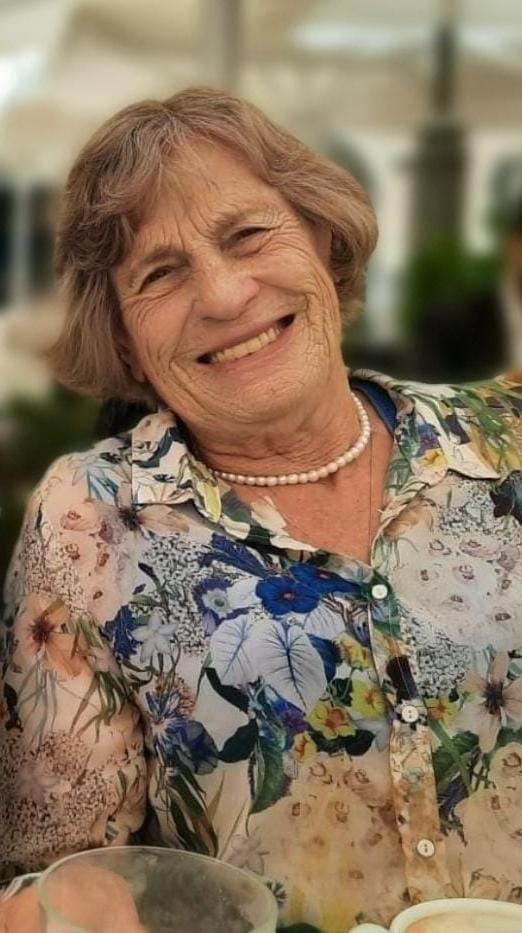
Eulogy by Geert/Chaim
'In this life you sometimes have to choose between pleasing God and pleasing man. And in the long run, it's better to please God – He is more apt to remember' (Harry Kemelman, Saturday the Rabbi went hungry – end chapter 10)
Today is the fifth time that I am burying someone very close to me. In 1976 it was my mother, in 1977 my father, in 1997 my father-in-law, in 199 my mother-in-law. I conducted the services for all four of them, while I was a protestant minister. Today is the most important, burying as a simple Jew the love of my life.
Marian's parents had planned their marriage on May 10, 1940. That day Nazi Germany invaded Holland that day. On the 14th, the Nazis bombarded Rotterdam. Also the furniture my parents-in-law had bought was destroyed. They married finally August 2 that year. 50 years later, August 2 1990 while we were celebrating this jubilee, Iraq invaded Koeweit.
On May 22, 1941 their oldest child was born, Maria Elisabeth Johanna, named after her father's mother, who had passed away of breast cancer at the age of 39. Her call sign was Marie or Marietje, names she began to hate that much that during her thirties and forties still got angry, when one of her family members would use that name, because they did not accept that she consciously had chosen to be Marian.
The family lived in Bruinisse, a fisherman's village on one of the islands in the southwest of Holland. Less than half a year old, she showed her perseverance. Playing in the box, a toy had fallen outside. She so much stretched and bent her arm to get it, that she broke it.
In 1944, after the allied invasion in Normandy, the island was inundated by the Germans. The family (at that time two daughters and their mother pregnant with number three) was evacuated to the southern outskirts of Rotterdam. There, they survived the 'hunger winter.' The hunger she suffered made that she never could throw food away, nor accept that other people do so.
As she was the oldest daughter, her mother kept her from school weekly, in order to help with the laundry, without washing machine, without centrifuge. During the harvest season, she and her two year younger sister, were sent to the fields to collect left over potatoes. They dreamt that Boaz would appear. When she was eight, there were 5 children. She was not allowed to get any further education - with the only exception that at the age of 11 she was one of the youngest ever to get a typing diploma. That way, she could help her father with his work as journalist of island affairs. She also helped him as he also was cashier of the village bank.
On February 1, 1953, she awoke while a northwestern storm disaster hit the area she lived. As an almost 12 year old kid, she for a moment relaxed 'finally something happens in this dull village'. They are not washed away and lived a couple of days in the attic. The house was badly damaged, but could be repaired. After they were evacuated, she was separated from her family and billeted with a poor family, that misused her with mean work. The flash moment of those month was to be selected as participant of a vacation in Switzerland, invited by a Rotarian hotel owner.
Since she had to support the family, she once help caregiving to a family, where the wife was extremely ill and died. That way she discovered her destiny: nursing. To her relief, her mother - with whom she had at that time a very bad relation - was convinced by a friend, who was a chief nurse, gave her permission to studying nursing. At the age of 17 she began as nursing student at the Coolsingel Hospital (now Erasmus Medical Center), even though she had no requested schooling. She passed her nursing exams at the age of 20, but was allowed to use her badge only after her 21st birthday.
The question arose: What now? She considered specializing in psychiatric nursing. She took the tramway to the hospital in Poortugaal village but was kicked back by polders reminding her of the island she had escaped from. During her nursing years, she had followed courses study of the Bible and kita alef Judaism. She wrote a letter to the Council for Church and Israel of her church, to inquire about suggestions to work in Israel. Bingo, before she realized she landed op Lud airport in early 1964 and went to Jerusalem for some months ulpan. In these few months, she made an amazing number of friends. In summer she went to Tiberias, where she was to replace an almost 65 years old nurse. She came in a kind of private clinic at the location as the closed Maternity Clinic of the Scottish Church.
Probably during Succoth, at the end of the day at the clinic, a Dutch student in theology dropped by. He had arrived in early September with a scholarship at the Swedish Theological Institute in Jerusalem. He was curious about other Dutch Christians in the country. She whispered to the old colleague 'I give him a cup of coffee and kick him out'. That started our first conversation. Alas, we had to stop it yesterday.
A couple of days after I asked her to marry me in April 1965, she wanted to break off. She did not want to leave Israel. She was afraid that as wife of a minister, she would not be allowed to continue nursing professionally. I made two promises: I would see to it that she could work - sixty years ago that was quite revolutionary. Moreover, Secondly, I promised that once we would go back to Israel. I had found my answer to the first question one asks on the eve of every shabbat: 'Who can find a strong woman? ?אשת חייל מי ימצא: I did.
She became what to me what in Genesis 2 is said of Eva/Chaya: my כנגדו, an untranslatable word, sometimes tried as 'opposite'. We hugged. When you hug, you first see the other's eyes; only then you hold one another tight and you can see what is behind the back of the other. That is כנגדו, protecting one another. We had an engagement party in a garden in the Jerusalem quarter Arnona, on July 3, 1965
People have asked why we didn't marry there and then. Marian had to fulfill her contract and I had to go back got the university. We both had two sisters and two brother; our parents were alive. We wanted a family event. We had that on July 1, 1966 The service was conducted by Prof. Berkhof, whom we had met together in Jerusalem the previous year. He talked about Psalm 137 אם-אשכחך ירושלים תשכח ימיני… אם לא אעלה את-ירושלים על ראש שמחתי - If I forget you o Jerusalem, let my right hand wither … If I do not set Jerusalem above my highest joy.
We had everything ready in our very small apartment. Only the bed we had ordered had not yet arrived the day before. The shopkeeper said: you just need it tomorrow. At one o'clock under a full moon (tet-was be Tammuz) a huge package soon before the door. First thing to do at our wedding night - assemble our bed. And behold, it did not collapse.
We were not aware that the students doctor had used us for an experiment with a new anti-conception. April 4 1967, Avi was born. If not, we would have taken a ticket to Israel during the six day war. I studied hard. In 1969 I became minister in church not far from Maastricht. Marian had worked at Leiden as nurse and now as soon as possible she became chief night nurse in a hospital in Heerlen. In 1972 Channa was born. In 1975 Elisheva.
Shortly afterward we moved to Poortugaal, the village she had escaped from in 1963. Soon, she applied again for night duty.
In November 1980 I was nominated Theological Advisor to the Netherlands Reformed Church, located in Jerusalem. In March 1981, she pushed for biopsies. As result she underwent a double mastectomy. She studied all information on breast cancer treatment. Together we refused any therapy.
All seemed well - till after the removal of her gallbladder in 2006, she again asked for a biopsy. Once more, she seemed to have recovered.
Due to her visa in Israel, she stopped working in hospitals. If needed, she nursed privately. She used all her time for her second love, studying Judaism where and whenever she could. She was one of the few or may be the only non-Jewish woman invited to the first congress on Jewish feminist theology organized by Penina Peli z"l. During the dark years of my conflict with my church, she fought for me with all her might and prevented my spiritual collapse. For many years we had to live a dual life, half a year Holland, half a year Israel.
In 2019 we decided to locate definitively in Jerusalem. The day after having sold our house in Holland, once again cancer showed it evil head. We had extremely good help from our family doctor Wladimir Center of the Kupat Cholim and Prof. Cerny of Shaare Zedek. Not too forget, our amazing help Orly, brother Oran and dr. Morad serving in Ushpiz Bayit.
We fulfill today her last wish, words that we crown her tombstone:
In your hand I commit my spirit, you save me Lord, true God. בידך אפקיד רוחי פדיתה אותי יי אל אמת
Eulogy by Avi
Er staat in Kohelet 7 eerste vers 1 een opmerkelijk uitspraak
Beter is een goede naam, dan goede olie, en de dag des doods, dan de dag, dat iemand geboren wordt.
Voor mij is dit heel erg dubbel. Chaya is bevallen van een gezonde zoon en vandaag begraven we onze Ima.
Het klonk mij jaren geleden rauw in de oren, er is altijd blijdschap bij de geboorte van een nieuw leven in iedereen is verdrietig en in rouw wanneer iemand komt te overlijden.
Onze geleerden leggen het uit, zonder de Joodse commentaren kom je er sowieso niet uit. De vergelijking die gemaakt wordt is als een schip wat de haven verlaat of weer terugkomt in de haven. Vaak is bij het verlaten een feest maar wanneer een schip weer in de haven komt is het met stille trom.
Eigenlijk zou het andersom moeten zijn. Immers, als het schip de haven binnenvaart weet je dat het weer veilig. Hetzelfde geldt voor de nesjomme van onze Ima die na in dit geval na 84 jaar weer teruggeroepen is naar de Eeuwige. Onze Ima is veilig terug bij de Koning de Koningen, de Heilige geloofd zij Hij.
Mijn lieve Abba heeft verteld over haar jeugd, ik ga jullie wat vertellen over mijn Ima. Ja, je hoort het goed. Mijn (of beter onze) Ima. Niet mama maar Ima. Wij hebben altijd een Ima en een Abba gehad. En niet zomaar een Ima maar onze Ima.
Ik ben de oudste dus heb het voorrecht gehad haar van de kinderen het langste te kennen. En mocht ook heel lang horen dat ik haar nog 3 weken zwangerschapsverlof te goed heb…
Mijn Ima was niet alleen onze moeder maar ik heb destijds in de kleuterklas aan iedereen gevraagd wat hun moeder deed. Die waren moeder was het antwoord. Maar mijn Ima was ook zuster. En daar ben ik altijd apetrots op geweest.
Dat ze zuster was of zelfs nachthoofd voor een lange periode gaf haar een paar strepen voor op de rest. Onze Ima is wat je nu zou omschrijven als een echte Tijger Mama. Of beter tijger Ima. Dat betekende een aantal dingen. Als iets deed wat niet mocht dan klonk er een GRRR. Na twee keer GRRR moest je oppassen… Het betekende nog meer dat je niet aan haar kinderen moest komen. Onze Ima was met haar heldere blauwe ogen en onverschrokkenheid niet voor de poes. En dat uitte zich onder andere in de vele Ima-brieven die geschreven werden om dingen voor elkaar te krijgen die anders onmogelijk leken. Zoals die ene keer dat ik te lang moest wachten op mijn eindexamenlijst van ORT. Ze is gekomen tot en met Yitschak Navon die toen minister was van Onderwijs… En vrij kort later had ik mijn cijferlijst.
Diezelfde houding geef ik aan de hand over hoe ze om gegaan is met alle lichamelijke klachten die ze gehad heeft. Onze Ima is een groot vechtster geweest tegen alle kwalen en ziekten, zowel haar astma, de botontkalking en de kanker. Ze is echter nooit haar ziekte geworden en heeft samen met Abba op meerdere manieren genoten van het leven met alle dingen die ze los en vooral samen gedaan hebben, tot vrij kort geleden.
Een voorbeeld. In 2016 brak ze haar beide knieschijven waar we allemaal erg van schrokken. De eerste keer dat ik haar toen in het ziekenhuis opzocht was ik best wel geschrokken. Echter, een paar dagen later sprak ik haar over de telefoon en had ze op haar donder gekregen van de fysiotherapeut omdat ze te veel aan het oefenen was. Dat is mijn Ima, dacht ik en ik was ontzettend trots om haar weer te zien met haar rollator een jaar later, rondlopend op de Machane Yehuda. Ze liet zich niet kisten door een paar gebroken knieschijven…
Deze kracht om te leven te staan ervaar ik als erg inspirerend en is een van de vele voorbeelden.
Onze Ima had groene vingers. Dat werd al zichtbaar tijdens haar verpleegstersopleiding waarbij ze de krant gehaald omdat haar kamer de meest groene kamer van allemaal was. Overal waar we gingen wonen werd de tuin een paradijs. En er werd een zandbak gemaakt. En een schommel of een klimrek door onze Abba. Er was altijd een bloemenpracht van eindeloos gestekte geraniums en de rozen en vele andere bijzondere planten en bloemen. Iets met het derde oogje…
De liefde voor het Land Israel en het Jodendom hebben wij met de paplepel binnen gekregen. Dat uitte zich in de vele reizen die ze soms samen, soms apart maakten. Het gaan naar Israel als gezin in 1982 heeft bij ons allemaal een blijvende, positieve invloed gehad.
De afgelopen jaren was het gevecht tegen de kanker iets wat sterk aanwezig was. Zowel Channa als ik en samen met Elisheva zijn we vaak geweest en hebben de vele verhalen van hun uitermate bijzondere leven mogen horen en ook op de video gezet. We hebben vaak herinneringen opgehaald en veel gelachen onder het genot van wat sterke drank en nootjes van de Machane Yehuda. De laatste keer was afgelopen mei waar we heel intensief met zijn vijven allerlei herinneringen hebben opgehaald en besproken hoe het rond het einde moet.
Ik ben blij en heel dankbaar dat Ima mijn Ima was. Of beter is. Want we zullen haar herinnering in leven houden in onze harten, wetende dat ze nu op een plek is waar ze geen pijn meer heeft.
Ik sta hier met een enorme dankbaarheid naar de Eeuwige toe dat Ima mijn Ima is.
Moge haar herinnering een zegen zijn voor iedereen die haar gekend heeft en moge een ieder van ons troost vinden bij de Eeuwige.
Eulogy by Elisheva
הספד אלישבע
אמא היקרה כל כך הרבה זמן חשבתי על מה להגיד עלייך בהספד, ופתאום שזה מגיע , קשה לדבר .
היית אישה חזקה , יוצאת דופן ביכולת שלך לקום אחרי משברים , שברים ומחלות , לפעמים היה נדמה שגם הפעם בסוף תנצחי את המחלה. 46 שנה מאז שחלית לראשונה , שברת שיאים של הישרדות , ובסוף המחלה גברה עלייך , לא לפני שנתת מלחמה נחרצת וחזקה למשך שנים .
למשך 59 שנה צעדת יחד עם אבא , הזוגיות שלכם היית מיוחדת בקשר העמוק ביניכם , נאמר עליך ״ לכתך אחריי במדבר בארץ לא זרועה״ , היית לצד אבא בכל הדרך וגם כששילמת מחירים אישיים של קריירה וכו , היית שם בלב שלם ביחד איתו. בדרך שלכם לחמתם למען ארץ ישראל ועם ישראל והובלתם שינויים משמעותיים בתפיסה של הרבה מאד אנשים כלפי עם ישראל . והתקרבתם עוד ועוד לעם ישראל.
ב 2019 החלטתם לבוא ולגור בארץ באופן קבוע , בהתחלה חששתי מזה, כי אני לבד , אבל אבי וחנה והוכיחו שאני לא לבד . אני מודה לכם על הזכות שנתתם לי להיות פה בשבילכם .
אני מודה לך שנתת לי לעזור לך לפעמים , ואני אומרת לפעמים , כי היית אישה הכי עצמאית ולא תלותית שאני מכירה, תודה שהסכמת שמדי פעם אני אביא אוכל כשלא הרגשת טוב, שנתת לי להיות שם בהליכים רפואיים ושנתת לי לעזור לך לנקז את המיימת. אני מודה לך האמון שנתת לי , לא היה לך קל בזה . תודה
השבועות האחרונים היו קשים , בכל ביקור היה אפשר לראות את ההתדרדרות , ולעיתים כל יום היה עוד משהו שלא יכלת לעשות עד שהמחלה הארורה כבר גרמה לך לאבד את הכל . ידענו מאז ומתמיד שאת רוצה להישאר בבית עד הסוף , במהלך השנים ,בלית ברירה היית גם הרבה בבתי חולים , אבל תמיד השתחררת קצת לפני האדם הממוצע. כי פשוט לא היית אישה של ממוצע.
היית אישה אצילי במחלה, לא שלא היה לך ביקורת , כי היה , ולא שלא התלוננת מדי פעם על מה שלא תקין, אבל עשית כל מאמץ לא להתלונן , את רוב האנחות כאב שלך מכל החיים שמענו בימים האחרונים , רק כשכבר לא באמת היית בהכרה.
היית אישה מיוחדת , ביחס שלך לכל האנשים באשר הם , הבית היה פתוח לכל מיני אנשים והקדשת הרבה זמן ומאמץ לאנשים שהיו צריכים אותך , למדנו ממך לכבד כל אדם .
אמא, תנוחי על משכבך בשלום , תודה שנתת לנו לעזור לך , ונהיה פה בשביל אבא , לא נצליח להחליף אותך אבל נשתדל .
אוהבת מאד
English Translation:
Dear ima
I have thought for so long about what to say about you at the funeral, and when it suddenly arrives, it's difficult to speak.
You were a strong woman, exceptional in your ability to get up after crises, breaks and illnesses. Sometimes it seemed that this time too you would finally overcome the disease. 46 years after you first got sick, you broke survival records, and eventually the disease overcame you, not before you fought a determined and strong battle for years.
For 59 years you walked together with abba, your partnership was special because of the deep bond between you. It was said about you: "Follow me in the desert, in a land where nothing is sown." You always stood by abba's side, and even when you personally paid the price for your career, etc., you were there wholeheartedly with him. On your way you fought for the Land of Israel and the people of Israel, and together you brought about significant changes in many people's perception of the people of Israel. And you came closer and closer to the people of Israel.
In 2019 you decided to come and live in Israel permanently. At first I was afraid of this, because I am alone here, but avi and channa proved that I am not alone. I thank you for the privilege you gave me to be here for you.
I thank you for letting me help you sometimes, and I say sometimes, because you were the most independent and non-dependent woman I know. Thank you for agreeing that I would occasionally bring food when you weren't feeling well, that you let me be there during medical procedures and that you let me help you drain your ascites fluid. I am grateful for the trust you gave me, it wasn't easy for you. Thank you.
The last weeks were difficult. With every visit you could see the deterioration, and sometimes every day there was something else you couldn't do until that damned disease had already caused you to lose everything. We have always known that you wanted to stay at home until the end. Over the years, without choice, you were also often in hospitals, but you were always discharged a little earlier than the average person. Because you simply weren't an average woman.
You were a noble woman during your illness, not that you didn't have criticism, because you did, and not that you didn't complain from time to time about something that wasn't right, but you made every effort not to complain. We heard most of your sighs of pain and groans from your whole life in the last days, only when you were no longer really conscious.
You were a special woman, in your attitude towards all people, whoever they were. The house was open to all kinds of people and you devoted a lot of time and effort to people who needed you. We learned from you to respect everyone.
ima, rest in peace, thank you for letting us help you, and we will be here for abba, we won't succeed in replacing you but we will try.
Love very much
Eulogy by Channa
Ima, mijn Ima.
We hebben altijd een intensief contact gehad. We konden heftig ruzie maken. Maar ook intens van elkaar houden. We lijken dan ook meer op elkaar dan dat we soms willen toegeven.
Als kind zat ik al in de modder te wroeten. En soms kreeg ik op mijn donder als t om nette kleding ging. Maar meestal liet je me mijn gang gaan. Je bewonderde mijn schatten. Je liet me als kind al begrijpen dat scherven potten zijn geweest. Resten van mensenlevens. En dat neem ik nog steeds mee.
In 1982 gingen we met de auto onderweg naar Israel.
We gingen langs diverse opgravingen. In Italië, Griekenland, Cyprus, Mykonos. En daarna in Israel. In onze eerste jaren in Israel nam je eerst ons allemaal mee op expeditie: naar Shomron, naar Gaza (toen kon dat nog).. later gingen we samen op pad. Je had een 'spieker' - een spijker.. in je tas, waarmee we scherven lospeuterden. En onze schatten namen we mee.
Samen op pad, naar opgravingen, naar bedouinen, de woestijn in. Naar de markt. Je liet me kennismaken met mensen, culturen, we hadden lol om een televisie die uit een oranje kist kwam in een bedouinen tent. Je wakkerde me nieuwsgierigheid aan.
Jij was t die destijds tegen mij zei in Jericho dat dat opgegraven was door een vrouw. En daarmee plantte je een zaadje.
Dat zaadje heeft ook een andere dimensie.
Die van de verbinding met de aarde. Dat wroeten in de grond. De tuin. T koesteren van planten. Wroetende in de modder maakte je van een stuk kaal niks een paradijs. In Poortugaal, in Oude Tonge, later in Rhoon en daarna ook op de Gath. Van Heerlen heb ik alleen verrre vage herinneringen. Maar ook daar zal t een paradijs zijn geweest. Lieve Ima, Je liet dingen groeien op onmogelijke plekken. Op moeilijke harde gronden. Maar bij het onderhouden van een tuin hoort ook het vechten tegen onkruid. Onkruid vergaat niet zei je altijd. Onkruid moest altijd bestreden worden. Van plukjes gras tussen de tegel, tot en met de chamtsoetim op de Gath. En zo was je ook aan in gevecht tegen het onkruid in je lijf.
En dus speelde het onkruid -de ziektes -hun rol in onze levens. Je gevecht tegen t onkruid in je lijf. Dat groeide en werd weer ingedamd. Er uit gerukt met wortels en al.
Maar onkruid vergaat niet. Het ging toch weer woekeren.
Je hebt ons geleerd om niet bang te zijn voor pijn. Het is geen reden om je dromen niet te volgen. Onkruid is geen reden om geen mooie tuin te hebben. Ik sta hier dan ook vanwege dat besef. Laat je nooit belemmeren. Dat ook daar in groei zit. Dat ook in de rauwe vaak pijnlijke aarde van ziekte vruchtbaar kan zijn. Dat scherven van een leven nog steeds potten zijn.
Ik heb nog iets heel stevig meegekregen. Wethouders, aannemers, projectontwikkelaars - vaak bullebakken, t zijn ook maar mensen. Je hoeft niet bang voor ze te zijn. T is ook onkruid. T vergaat niet. Maar je kan t er wel uittrekken. Dus daardoor ook het besef dat eigenlijk niemand je wat kan doen. Gewoon je eigen plan trekken. Je eigen tuin maken.
Dat heb je je leven lang gedaan. De regie gehouden. Tot op de laatste momenten. Stevig in de aarde. Duidelijk in wat je wel en niet wil.
Altijd blijven vechten tegen t onkruid in de tuin en in je lijf.
Je laat een bloeiende tuin achter en dat neem ik mee.
ja, dat neem ik mee. En we geven je nu aan de aarde.
Daar waar je zelf altijd geworteld zat.
Toda lieve Ima.